Lathe Machine Types Explained: Bench, Engine, Gap Bed & CNC
Compare lathe machine types: bench lathe, engine lathe, gap bed lathe and CNC lathe. Swing, spindle bore, uses and buying tips to pick the right turning machine.
What Are the Main Lathe Machine Types?
Lathes look similar from the outside, but the bed design, headstock drive and controls change everything about what they can produce. Four families dominate the metalworking market: the bench lathe, the engine lathe, the gap bed lathe and the CNC lathe machine. Picking among them is less about brand and more about your workpiece size, material, batch size and budget. This guide explains each lathe machine type, its typical specs, its best-fit customers and the WIST models that cover it.
Bench Lathe Machine: Compact Entry Turning
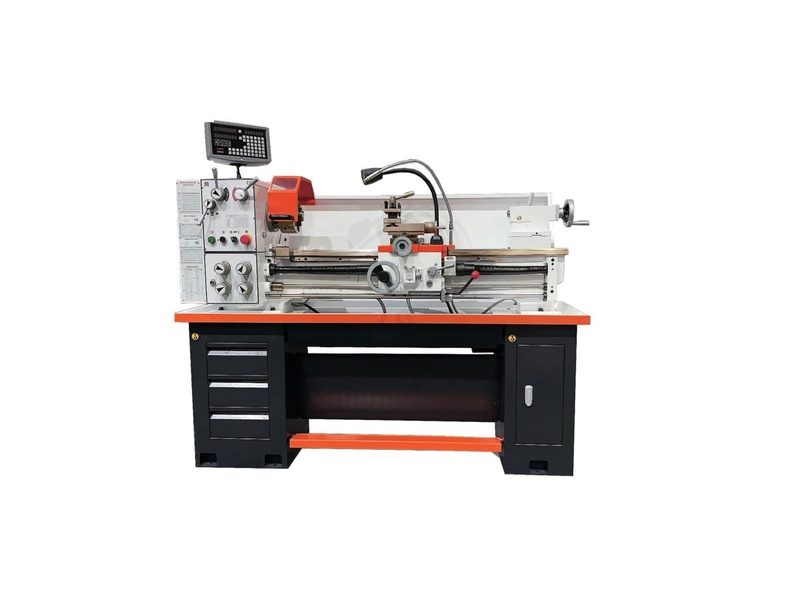
The bench lathe is the smallest floor of the family. It swings roughly 250–410 mm over the bed and sits on a workbench or a small stand, which makes it the best choice for hobbyists, schools, training centers and small repair shops. A bench lathe is inexpensive to buy, cheap to run and forgiving for new operators.
WIST's bench range starts with the C0636A bench lathe, a compact machine with easy speed-change levers, hardened and precision-ground headstock gears and bed guideways, and an optional 51 mm spindle bore with variable-speed drive. For a slightly bigger swing, the CM6241 manual lathe offers 420 mm swing over bed and a 52 mm spindle bore with a double-speed motor and optional variable speed. Shops that want a universal, more heavily geared bench machine should look at the W410 universal bench lathe, which brings a 12-speed gearbox, a larger spindle bore and full threading capability to the bench format.
Best for: small parts, prototyping, education and repair work. Not ideal for: heavy steel removal or long shafts over roughly one meter.
Engine Lathe: The Shop-Floor Workhorse
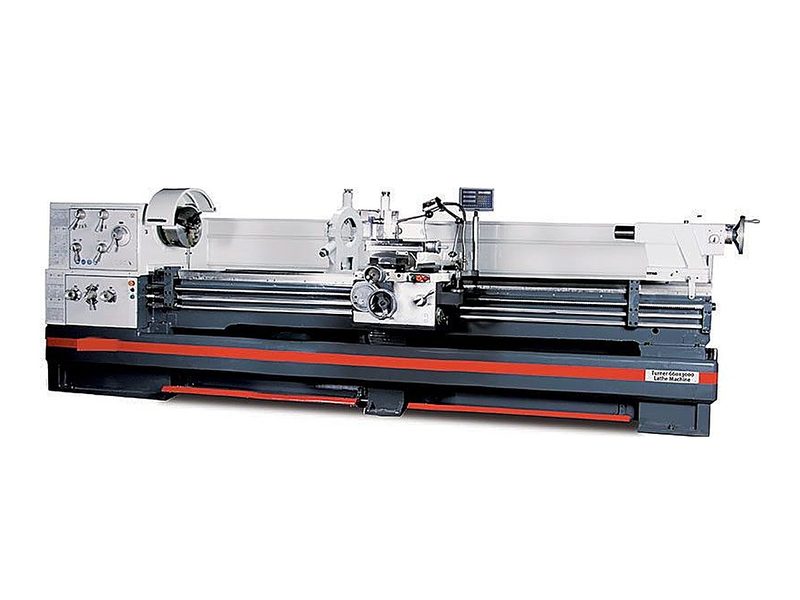
The engine lathe is the classic, all-geared, floor-standing manual lathe that every job shop recognizes. It is larger than a bench lathe, swings 460 mm and up, carries a bigger spindle bore and a heavier main drive, and cuts a full range of metric, inch, diametral and module threads. Because the operator controls carriage and cross-slide by handwheel, the engine lathe stays flexible for one-off and low-batch turning.
WIST's engine lathe line centers on the W510 metal lathe machine, a gear-headed lathe with a heavily ribbed bed, hardened and ground guideways and headstock gears, and a 5.5 kW or 7 kW main drive with a wide threading range. The W560E steps up spindle precision with tapered-roller and angular-contact ball bearings for higher-speed finishing. For the largest manual work, the W660 heavy engine lathe adds a large spindle bore and center distances of 1000, 1500, 2000 and 3000 mm, while the C6256C heavy duty lathe reaches 1000 mm swing over bed with a helical-gear multi-axis headstock and mechanical clutch for the most demanding manual turning.
Best for: general machine shops, maintenance departments, medium batches, shafts and flanges. Not ideal for: high-volume repeating work where operator time dominates cost.
Gap Bed Lathe: Extra Swing for Flange Work
A gap bed lathe is an engine lathe with a removable bed section behind the chuck. Pull the gap block out and the machine can swing oversized discs, pulleys and flanges that would otherwise hit the ways; bolt it back in and you get the normal, rigid bed for long shafts. It is the practical compromise when your customers mix large-diameter short work with conventional shaft turning.
The CD6250C manual lathe is WIST's gap-bed model: a stable base with optional two-range infinitely variable speed, hardened and ground gears and guideways, and an optional 105 mm spindle bore for large bar work. It is a reliable pick for workshops that machine pipe flanges, wheel hubs and similar disc-style parts without buying a second, bigger lathe.
Best for: flange and disc production, repair shops that see irregular large parts. Not ideal for: very long shafts where the gap removes effective center distance.
CNC Lathe Machine: Automated Production Turning
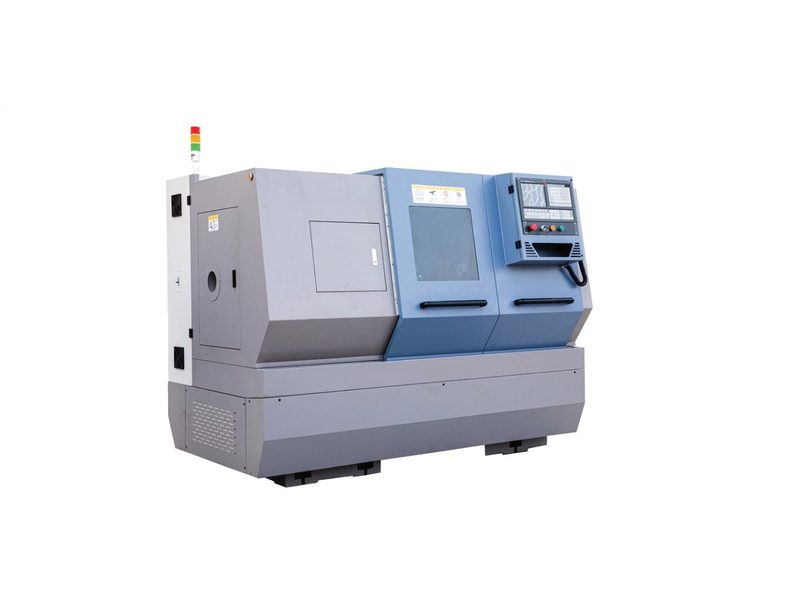
The CNC lathe replaces handwheels with a programmed spindle and servo-driven axes. Once the program and tooling are set, the machine repeats the same cycle automatically, which drives down cycle time per part and holds tight tolerance across thousands of pieces. A CNC lathe also frees the operator from manual feeding and lets them run more than one machine at a time.
Entry buyers often start with the CK6432 CNC lathe, a variable-speed flat-bed machine on an arched one-piece base with hydraulic chuck, hydraulic tailstock and an optional 4/6/8-station electric turret. Job shops that want rigidity and good chip flow move up to the slant-bed TK4036 slant bed CNC lathe, built with Taiwan-type lead screws and linear guideways and optional power-tool turret and Y-axis. For heavy bar work, the CK6166 heavy duty CNC lathe pairs a gear-head spindle with a big bore and hardened, ground headstock gears and ways.
Best for: medium and large batches, tight tolerances, complex shapes and lights-out production. Not ideal for: one-off prototypes where programming time outweighs the cycle-time saving.
Lathe Machine Types Compared at a Glance
- Bench lathe — 250–410 mm swing, small spindle bore, low motor power, lowest price, for light work and education.
- Engine lathe — 460–1000 mm swing, 5.5–7 kW drive, full threading, flexible one-off turning.
- Gap bed lathe — engine lathe plus removable gap block, bigger swing for flanges, long center-distance option.
- CNC lathe — programmable spindle and axes, hydraulic chuck and turret, high repeatability, best for batches.
How to Choose the Right Lathe Type for Your Business
- Size your work first: the largest workpiece diameter and length decide swing and center distance; add a 20% margin.
- Match the type to batch size: one-offs favor an engine lathe; recurring parts favor CNC.
- Check spindle bore: for bar work, the bore should be 10–20% larger than the bar stock; 105 mm options suit heavy tube and bar.
- Plan accessories now: chucks, steady rests, follow rests, coolant and tool holders cost less when ordered with the machine.
- Confirm voltage and frequency: WIST builds machines to your local power standard, such as 220V/50Hz or 380V/60Hz.
Send your workpiece details — diameter, length, material and expected batch size — to WIST Machinery, and we will recommend the right lathe machine type with a complete accessory list and a factory FOB or CIF quote within 24 hours. You can also reach us on WhatsApp or by email.
Not sure which lathe type fits your work?
Send us your workpiece details and target budget — our export team will reply within 24 hours.