Bench Drill Press Buying Guide: Capacity, Speeds and Motor
How to choose a bench drill press: drilling capacity, spindle speeds, motor power, worktable type and overload protection for workshop, teaching and light production.
Match Drilling Capacity to Your Workpiece
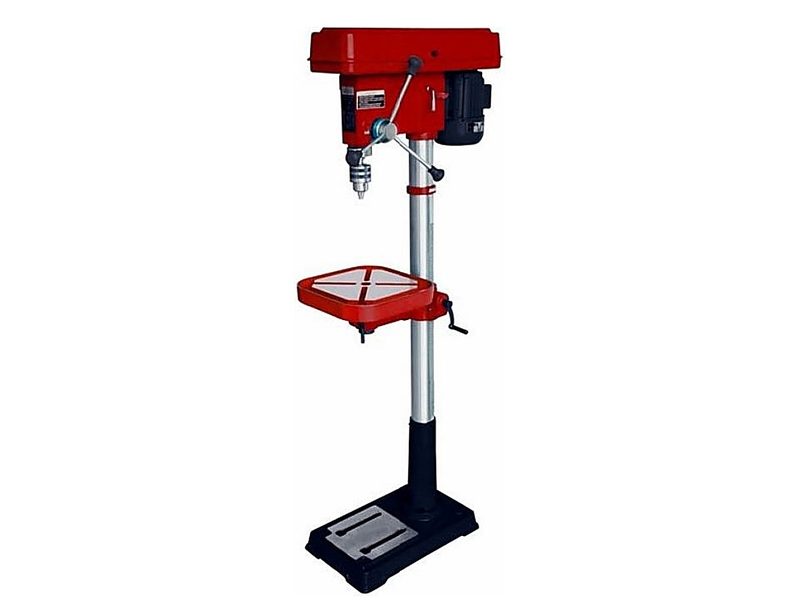
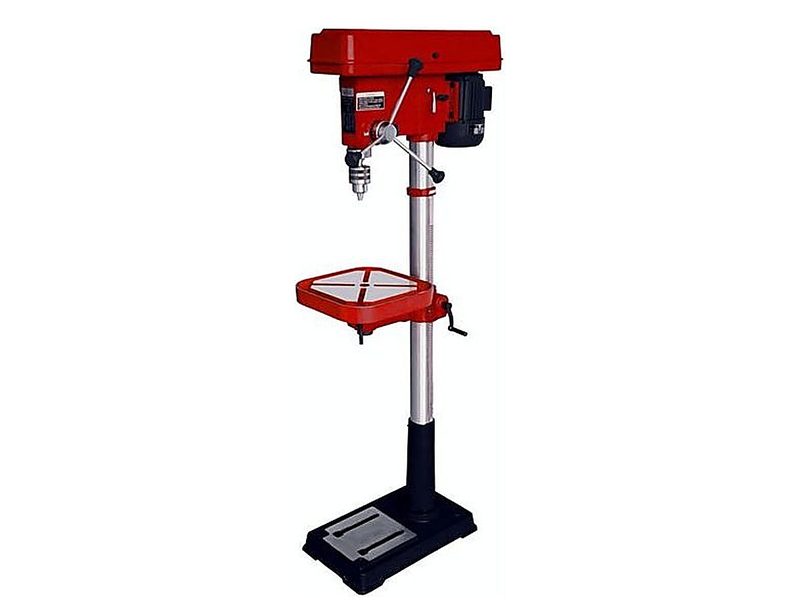
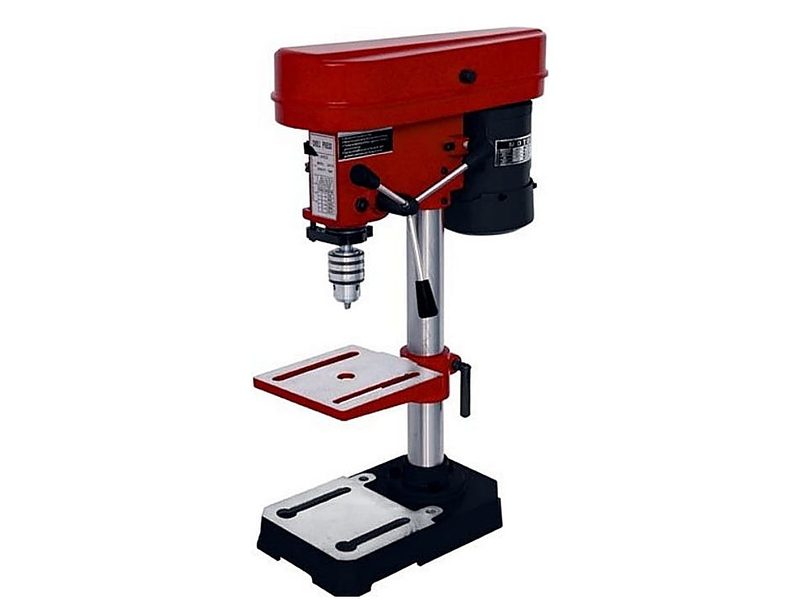
The maximum drilling diameter decides the largest hole the press can drill in one pass. A compact 13 mm drill like the W4113H suits model making and light home workshop work; 16 mm models such as the W4116ZJ and W5116 cover general workshop drilling; 20 mm machines including the W4120 and W5120 handle common structural and fixture holes; the 25 mm W5125AJ steps up to heavier work; and the 32 mm W5132A serves demanding production drilling. Match the rated capacity to your largest expected hole and workpiece material.
Spindle Speeds for Different Materials
More spindle speeds let you match RPM to drill diameter and material: lower speeds for large drills and steel, higher speeds for small drills and aluminum. WIST bench drills run on belt drive, which stays quiet and keeps speed selection simple, with 5/12 or 16 spindle speeds. A 16-speed model such as the W4116ZJ or W5116 covers a wider material range than a fixed-speed machine, while 12-speed machines like the W5120, W5125, W5125AJ, W5132A and W4120 suit typical workshop drilling.
Motor Power and Duty Cycle
Motor output should match how hard and how long you drill. Light-duty home and teaching drills run 375-550 W; the W5125 mid-size and W5120 sit in the general workshop range; the W5125AJ uses a 1100 W motor, while the W5132A offers 1100/1500 W for sustained, accurate production drilling. A heavier cast head and column dampen vibration and hold drill concentricity and verticality.
Worktable Type and Depth Stop
An adjustable or tilting worktable positions awkward workpieces and angled holes; several WIST models (W5120, W4120, W5125) tilt for versatile setups. A depth stop repeats hole depth accurately, which is useful for batch drilling. The W5132A pairs a large 420x470 mm worktable with the heavy-duty frame needed for bigger fixtures.
Safety and Overload Protection
Belt-driven presses protect the motor under overload: on the W4120 the belt slips when overloaded to safeguard the machine. Low-noise belt drive, an adjustable table and clear speed controls make the drill safer for daily workshop and teaching use. Check that guards, switches and depth stops are included before you buy.
Send us your workpiece material, largest hole diameter and required quantity, and we will recommend the right bench drill press with a FOB quote within 24 hours.
FAQ
Capacity is the largest hole the press will drill in one pass in mild steel, so pick one step above your normal job and never plan to run at the rated maximum all day. The W4113H drills 13 mm for model work, the W4116ZJ and W5116 16 mm, the W4120 and W5120 20 mm, the W5125AJ 25 mm and the W5132A 32 mm. Holes larger than that go to a boring head, a mag drill with an annular cutter, or a bigger machine.
Enough to keep the drill at the right surface speed, which means more speeds as the work range widens. A 5/12-speed machine such as the W4113H is fine for one material and a narrow drill range; 12 speeds on the W4120, W5120, W5125AJ and W5132A covers general workshop drilling; 16 speeds on the W4116ZJ and W5116 give closer steps across steel, aluminium and plastics. Belt-drive speed changes stay simple and quiet, and a chart on the machine takes the guesswork out of picking a step.
It is a question of work height and part size, not power. Bench models sit on a bench and top out around 680-1000 mm overall height (W4113H 680 mm, W4116ZJ 980 mm, W4120 1000 mm), which suits small parts at eye level. Floor models stand 1600-1700 mm (W5120, W5125AJ, W5132A) so a long workpiece can hang below the table and the operator works standing up - the right layout for structural and fixture work.
Motor power sets the largest drill you can push, and duty cycle sets how long you can push it. The range runs from 250/350 W on the W4113H through 375/550 W on the W4116ZJ and 550/750 W on the W4120/W5120 to 1100 W on the W5125AJ and 1100/1500 W on the W5132A. For continuous production, size one step above the hole you run most often, and let the motor cool between heavy passes rather than stalling it repeatedly.
Check table size and swing together, because swing limits how far from the column a part can sit: from 254 mm on the W4113H to 508 mm on the W5132A, with tables from 190x190 mm up to 420x470 mm. A repeatable depth stop with a scale saves scrapped holes on batch work, and a guarded spindle, no-volt release switch and proper work clamping are baseline safety requirements - never hold a part by hand on a drill press.
Not sure which machine fits your job?
Send us your workpiece details and target budget — our export team will reply within 24 hours.