Updated November 2026 · 8 min read
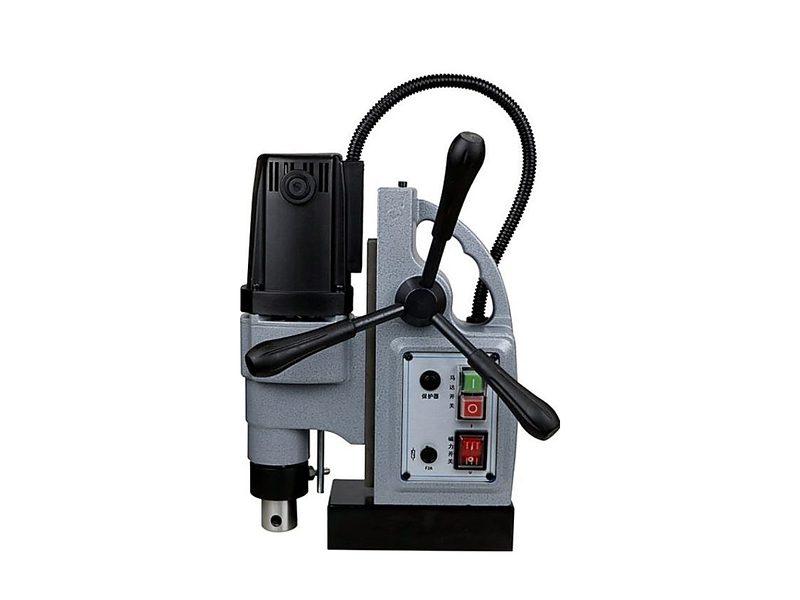
If you work in structural steel, shipbuilding, bridge construction, or on-site metal fabrication, a portable magnetic drill is one of the most time-saving investments you can make. Instead of clamping workpieces to a drill press or rigging up a radial arm drill, you simply stick the magnetic base onto any steel surface and start drilling.
But with so many models on the market — from compact 35mm units to heavy-duty 100mm+ industrial drills — how do you choose the right one for your shop?
In this guide, we break down the top 5 magnetic drill machines for steel fabrication in 2026, key specs to compare, and what to look for before you buy.
A magnetic drilling machine (also called a mag drill, magnetic base drill, or magnetic press) is a portable drilling tool with an electromagnetic base that attaches directly to ferrous metal surfaces. It uses annular cutters (core drills) to produce fast, accurate holes in steel plates, beams, pipes, and structural sections — without needing to remove the workpiece from the fabrication site.
Key advantages over conventional drilling:
Before we get to the top 5, here are the critical specs to compare when shopping for a magnetic drill:
| Spec | What It Means | What to Look For |
|---|---|---|
| Max Bore Diameter | Largest hole the drill can cut | 35mm for light work, 50-100mm for structural steel |
| Magnetic Pull Force | How strongly the base holds to steel | ≥ 12,000 N for safe overhead/horizontal drilling |
| Spindle Taper | Tool holding system | Weldon shank (19mm or 32mm) is industry standard |
| Stroke / Travel | Maximum drilling depth | ≥ 50mm for standard plate, 75mm+ for deep holes |
| Weight | Portability factor | 10-15 kg for site work, 20+ kg for heavy-duty shop use |
Best for: Small fabrication shops, maintenance teams, and on-site contractors who need a reliable, affordable mag drill.
The W35C-1 from WIST Machinery is a compact, powerful magnetic drill that punches well above its weight class. With a 35mm maximum bore diameter and 13,000 N of magnetic pull, it handles most structural steel drilling tasks with ease.
Key specs:
Best for: Structural steel fabricators, bridge builders, and shipyards drilling larger diameter holes.
For shops that regularly drill 40-50mm holes in thick plate, a heavy-duty 50mm magnetic drill is the workhorse. These machines feature stronger motors (1500W+), deeper stroke (50mm+), and reinforced bases for maximum stability on large workpieces.
Key specs to look for:
Best for: Working in confined spaces, on-site repairs, and HVAC/mechanical contractors.
When you're drilling in tight corners or on scaffolding, a full-size mag drill just won't fit. Compact mini magnetic drills (typically 8-10 kg) are designed for accessibility — they're narrow enough to fit between beams and light enough to hang from a harness all day.
Trade-off: smaller bore capacity (usually 30-35mm) and less torque, but unmatched portability.
Best for: Shops that need both drilling and tapping in one machine.
Combo magnetic drills feature reversible motors and tapping attachments, letting you drill a hole and tap the thread in the same setup. This saves significant time on bolt-hole patterns and flange connections.
Look for models with variable speed and reversible feed for smooth tapping operations.
Best for: Remote job sites without power, rooftop work, or anywhere cord management is a headache.
Cordless magnetic drills use high-capacity lithium-ion batteries for both the electromagnet and the motor. Modern 18V/36V models deliver enough power for 35mm holes in steel, and the best part — no cord to trip over or unplug mid-job.
Trade-off: shorter runtime (usually 20-30 holes per charge), so keep a spare battery handy.
When you buy a magnetic drill from a local distributor or big-box tool store, you're paying for layers of markup — importer, wholesaler, retailer. Buying directly from the factory in China cuts out those middlemen, so you get:
WIST Machinery manufactures the W35C-1 portable magnetic base drill at our factory in Yangzhou, China. Designed for steel fabricators, maintenance teams, and equipment distributors worldwide:
Overhead and vertical-up work is the case where holding force matters most: the base has to carry the machine plus the feed pressure. The W16S class holds with 8,500-10,000 N, which is comfortable for horizontal and vertical work on clean plate; for overhead drilling on site, choose the highest-force unit available for the cutter size, clean the contact patch to bare metal, and always fit the safety strap.
Annular cutters cut only the rim, so for the same hole diameter they remove far less material and run two to three times faster with lower power draw - that is why a 12-35 mm hole is mag drill work. Twist drills still win for small holes under about 13 mm, for tapping-size holes and for slots, which is why the W35C-1 accepts both: twist drills to 13 mm and annular cutters from 12 to 35 mm.
Cutter depth first, machine stroke second. A cutter can only cut as deep as its own flute length, and the spindle stroke has to exceed that plus the pilot clearance - the W16S runs a 140-205 mm stroke, which is ample for standard cutter depths. For plate deeper than the cutter, drill from both sides or step through with a longer cutter rather than forcing the feed.
Specify the destination, not the warehouse. WIST magnetic drills ship with 110 V or 220 V options at 50/60 Hz, which covers North America, the UK, Europe and most export markets. If you resell, standardise on the voltage your customers actually have on site, and confirm the plug type and any local certification requirement before ordering.
On curved work you need a swivel or pipe base, because the flat base only contacts a line. On painted, rusted or mill-scaled steel the holding force drops - clean the contact patch to bare metal before switching the magnet on, and never rely on the magnet alone for overhead work. On thin sheet the base can saturate the plate; clamp a thicker backing plate underneath.
Looking for a magnetic drill for your shop or distribution line?
Email: [email protected] | WhatsApp/WeChat: +86 18852573536