Updated November 2026 · 7 min read
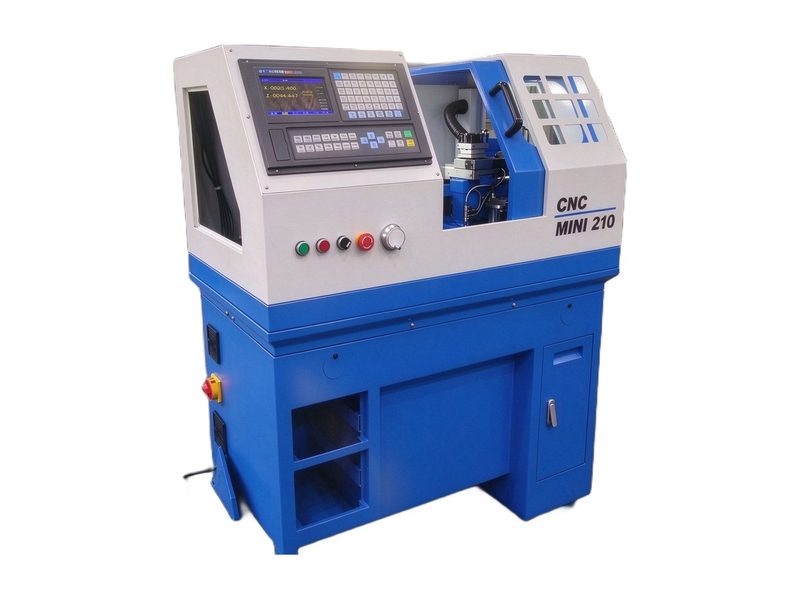
A mini CNC lathe lets hobbyists, students, and small-shop owners turn precise metal parts at a bench-top size. Whether you want to make shafts, bushings, couplings, knobs, or repair components at home, a hobby CNC lathe removes the manual skill barrier of a conventional lathe while keeping the machine compact and affordable.
But not every small CNC turning machine is built the same. Some are true metal-cutting lathes; others are light-duty kits that flex under steel. In this guide, we walk through the specs that matter for a desktop CNC lathe, what beginners should budget for, and how to choose a model that grows with your projects.
A manual mini lathe demands practice with hand wheels, tool control, and consistent feeds. A CNC version repeats the same profile automatically from a G-code program, which matters when you:
For beginners and education, a CNC lathe for school or home is often the fastest path from CAD drawing to finished metal part.
| Spec | What It Tells You |
|---|---|
| Swing over bed | Maximum diameter you can turn over the bed. For small hobby parts, 180–250 mm is plenty; larger work needs a bigger swing. |
| Distance between centers | Maximum part length. Common mini CNC lathes cover 300–600 mm; long shafts need the longer option. |
| Spindle bore | Bar stock that can pass through the spindle. A bigger bore handles thicker stock and reduces re-chucking. |
| Spindle taper & speed | 5C or MT3/MT4 taper holds the chuck; a 50–2500 r/min range covers aluminum, brass, mild steel, and plastics. |
| Tool post | A 4-position quick-change post is standard on small CNC lathes; confirm it holds the tooling you plan to use. |
| Axis travel | X and Z travel must cover your part diameter and length with room for facing and tool approach. |
| Controller / G-code | Standard G-code (Mach3/GRBL-compatible or common CNC controllers) transfers skills to full-size machines; avoid locked-in proprietary controls if you want portability. |
| Frame & weight | A rigid cast-iron or steel frame resists chatter. Light plastic frames deflect under steel cuts and hurt surface finish. |
| Materials you'll cut | Aluminum, brass, and plastics are easy; mild steel needs more spindle power and a stiffer frame. |
| User | Typical Projects | What to Prioritize |
|---|---|---|
| Hobbyist / beginner | Knobs, bushings, small shafts, model parts, repairs | Compact footprint, easy controller, affordable entry price, aluminum/brass capability |
| Student / school lab | Training parts, coursework, G-code practice | Standard G-code, safety features, durable build, volume pricing for multiple machines |
| Small shop / prototype | Small production runs, fixtures, custom turned parts | Spindle bore, center distance, servo drives, steel-cutting rigidity, spare parts support |
WIST Machinery supplies compact CNC turning machines for hobbyists, schools, and small shops, factory-direct with CE certification. Three popular mini CNC lathe models are listed below.
Best for: Hobbyists moving up to real turning, school labs, and small-shop prototypes that need a longer bed and bigger bore.
See the CNC210 mini CNC lathe →
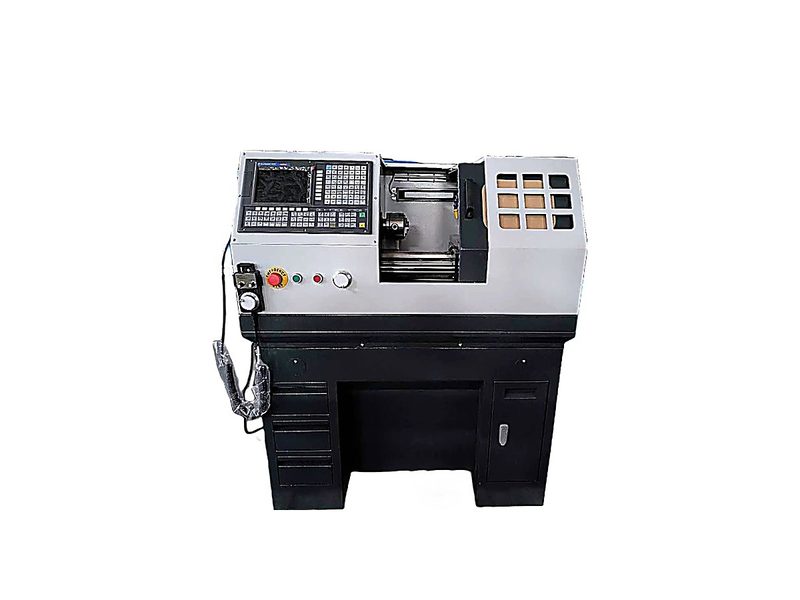
Best for: Beginners and home workshops that want a standard-size bench CNC lathe without the longer bed.
See the W210 desktop CNC lathe →
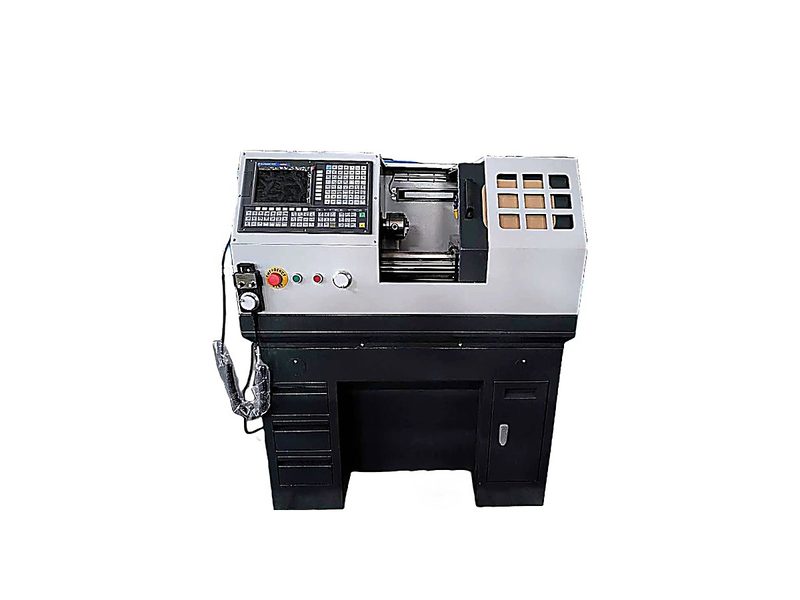
Best for: Tight budgets, model making, and first-time CNC lathe users cutting small aluminum, brass, and plastic parts.
See the W0618 small CNC lathe →
Sourcing a hobby or education CNC lathe directly from the manufacturer can cut the price substantially compared with domestic distributors. When you compare factory suppliers, check:
Start from the part, not the price. The W0618 swings 180 mm over a 300 or 350 mm bed with a 20 mm spindle bore, 50-2250 r/min, MT3 spindle and a 400/550 W motor, and weighs 90-100 kg - a desktop machine for small parts. The CNC210/W210 gives 210 mm swing, 400 mm centres, a 26 mm bore with 5C taper and a 1.2 kW spindle motor, so it takes thicker bar and cuts deeper. Buy the W0618 for learning and small work; buy the W210 when you already know you need to turn 25 mm bar.
It cuts mild steel with light passes and the right tooling. The 400/550 W W0618 and the 1.2 kW W210 both turn steel at low spindle speed with small depth of cut and sharp carbide or HSS tools, and both handle aluminium, brass and plastics comfortably. What they will not do is remove stock like a production lathe: many light passes, coolant or at least air blast on the tool, and realistic expectations about cycle time are what keep a hobby machine productive.
The spindle bore sets the limit, and it is the specification most often overlooked. The W0618 passes 20 mm bar, while the W210 passes 26 mm through a 5C spindle. Anything larger has to be chucked and cut in short lengths, which means more re-chucking and more error. If your projects start from 25 mm or 30 mm bar, choose the machine with the bigger bore at the start instead of working around it later.
Plan for a stable supply, a computer or controller with the CAM post for your control, and a basic tooling set: turning tools, a parting blade, drills, a centre drill and a live centre for the tailstock. Add a bench that carries 100 kg without flexing, because a mini CNC lathe on a light table will chatter and lose the accuracy the control promises. Confirm the voltage and plug standard for your country when ordering rather than converting afterwards.
If you make the same part more than a few times, or want profiles, radii and threads that hand wheels make tedious, yes. CNC repeats a program exactly, which is what makes small-batch production, mirrored parts and learning G-code worthwhile. If your work is one-off repair jobs and you enjoy turning by hand, a manual mini lathe such as the W210X400 costs less, is simpler to fix and teaches the fundamentals that CNC builds on.
Looking for a mini CNC lathe for your home, school, or shop?
Email: [email protected] | WhatsApp/WeChat: +86 18852573536